
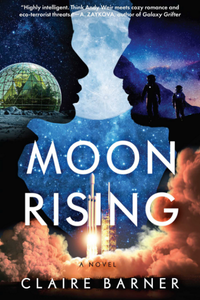
Moonrising, by Claire Barner
In 2073, controversial agronomist Dr. Alex Cole has dedicated her life to mutagenetic food, the only solution to feeding a world torn apart by climate change. When fierce opposition from radical environmentalists wipes out her lab funding, a surprising lifeline appears in the form of Mansoor Al Kaabi, a charismatic Emirati businessman who needs a sustainable food supply for his guests on the Moon’s first hotel.
Alex moves to the Moon colony with Mansoor, and they immediately dive into the challenging work. As she smuggles in illegal chickens, fights a vexing tomato fungus, and dreams of olive groves on the Moon, Alex is surprised to find herself falling in love not just with the lunar colony, but with Mansoor, whose vision for the future of the Moon extends far beyond luxury hotels.
Back on Earth, eccentric genius Victor Beard and Mansoor’s younger brother Rashid fight to push the Homestead Act through Congress. Without the support of the US government, they’ll never be able to achieve their goal to relocate humanity to the Moon and secure a second chance for life on Earth.
History Lessons, by Zoe B. Wallbrook
As a newly minted junior professor, Daphne Ouverture spends her days giving lectures on French colonialism, working on her next academic book, and going on atrocious dates. Her small world suits her just fine. Until Sam Taylor dies.
The rising star of Harrison University’s anthropology department was never one of Daphne’s favorites, despite his popularity. But that doesn’t prevent Sam’s killer from believing Daphne has something that belonged to Sam—something the killer will stop at nothing to get.
Between grading papers and navigating her disastrous love life, Daphne embarks on her own investigation to find out what connects her to Sam’s murder. With the help of an alluring former-detective-turned-bookseller, she unravels a deadly cover-up on campus.
This well-crafted, voice-driven mystery introduces an unforgettable crime fiction heroine.

The Tokyo Zodiac Murders, by Sōji Shimada, Ross MacKenzie
Japan, 1936 an eccentric artist has been found dead, in a room locked from the inside. His diaries reveal a terrible plan to kill seven of his female relatives, but it is not until after the discovery of his body that the plan is apparently carried out: the women are killed and later found dismembered and buried across rural Japan.
A decade on, an illustrator and an astrologer set off around the country to solve the gruesome unsolved mystery of the Tokyo Zodiac Murders.
Stillwater, by Tanya Scott
When Jack Quinn’s mother dies of a drug overdose, it’s not his father that raises him, but Gus—a ruthless crime boss who sees Jack for what he is: a whip-smart kid with untapped potential. It doesn’t take long for Gus to forge Jack into a weapon.
But Jack was also self-aware enough to know where this sort of life was going to lead him. When the time was right, he got out. Or so he thought.
Seven years later, Jack is now Luke Harris, a regular guy putting himself through college and aiming for a real job and a real future. Falling in love. But Jack’s past isn’t so easily forgotten, and the bodies in his closet won’t forgive him.
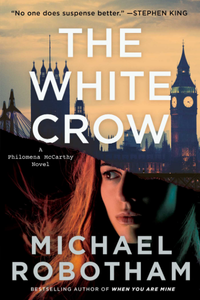
The White Crow (Philomena McCarthy #2), by Michael Robotham
Philomena McCarthy has defied the odds to become a young officer with the Metropolitan Police because her father and her uncles are notorious London gangsters.
On patrol one night, Philomena finds a barefoot child, covered in blood, who says she can’t wake her mother. Meanwhile, three miles away, a London jeweler has a bomb strapped to his chest in his ransacked store and millions are missing.
These two events collide and threaten Philomena’s career, her new marriage, and her life. In too deep, and falling further, Phil must decide who she can trust—her family or her colleagues—and on what side of the thin blue line she wants to live.
Confessions of a Grammar Queen, by Eliza Knight
Bernadette Swift, a young copyeditor at Lenox & Park Publishing, is determined to become the first female CEO in the publishing industry. But first she needs to take the next step up that ladder with a promotion that her boorish and sexist boss wants to thwart. Seeking a base of support, Bernadette joins a feminist women's book club at the New York Public Library, and soon, she's inspiring her fellow members to challenge the male gatekeepers and decades of ingrained sexism in their workplaces and pursue their personal and professional dreams.
And that is precisely what Bernedette does on a daily keeps her eye on the prize—equality for women in the workplace, and a promotion—while fending off the ire of her boss and the sabotaging efforts of a jealous coworker. With the support of her book club buddies and a certain charismatic editor at Lenox & Park who has completely fallen for her, maybe, just maybe, Bernadette will prove able to claim victory for herself and the young women coming after her.

We'll Prescribe You Another Cat, by Syou Ishida
Though it’s a mysteriously located clinic with an uncertain address, it can always be found by those who need it. And the clinic has proven time after time that a prescribed cat has the power to heal the emotional wounds of its patients. This charming sequel introduces a new lovable cast of healing cats, from Kotetsu, a four-month-old Bengal who unleashes his boundless energy by demolishing bed linens and curtains, to tenacious and curious Shasha, who doesn’t let her small size stop her from anything, and the most lovable yet lazy cat Ms. Michiko, who is as soft and comforting as mochi.
As characters from one chapter appear as side characters in the next, we follow a young woman who cannot help pushing away the man who loves her, a recently widowed grandfather whose grandson refuses to leave his room, the family of a young woman who struggle to understand each other, and an anxious man who works at a cat shelter seeking to show how the most difficult cats can be the most rewarding. This moving, magical novel of interconnected tales proves the strength in the unfathomable bond between cats and people.
The Girl in the Green Dress, by Mariah Fredericks
At the dawn of the Jazz Age, Morris Markey arrives in New York to become a writer. Having served in France, he needs to be in a place so distracting he cannot hear himself think. New in town, Markey hovers at the edge of the city’s revels, unable to hear the secrets that might give him his first Big Story. Finally one night he spots Joseph Elwell, a man about town known for courting wealthy married women, with a glorious girl in a dress of silver and dollar green.
The next morning, Elwell’s housekeeper runs out into the street screaming that Elwell has been shot. Every door and window in the house is locked. Did the ravishing woman kill her paramour? At last, Morris Markey has his story.
To penetrate the glittering world of Joseph Elwell, Markey turns to the newly famous Scott and Zelda Fitzgerald, who met Elwell the same fateful night. Bored while Scott is working on his next novel, Zelda offers to help Markey with his investigation.
Together, Markey and Zelda learn that there were many people in Elwell's life who had reason to want him dead. And when a second man is found shot in his home in a very similar way, Markey begins to suspect that the truth may be more complicated—a story so dangerous that after he finishes it three decades later, he himself is found dead in his home, a single bullet through his head.
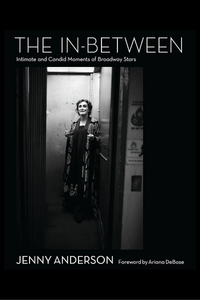
The In-Between: Intimate and Candid Moments of Broadway Stars, by Jenny Anderson, Ariana DeBose
Backstage in the most coveted theaters of Broadway works Jenny Anderson, a legend in her own right. A known Broadway photographer, Anderson has worked with the biggest names of theater and used the power of photography to tell the stories behind the what happens behind the scenes on Broadway.
The In-Between has been years in the making, Anderson's personal ode to Broadway's backstage. It includes over 100 of Anderson’s behind-the-scenes photographs taken on the sets of some of the most iconic Broadway shows of the last decade including Hamilton, Wicked, Anastasia, Kinky Boots, Gypsy, Waitress, Company, Phantom of the Opera, and more.
What Is Wrong with Men: Patriarchy, the Crisis of Masculinity, and How (Of Course) Michael Douglas Films Explain Everything, by Jessa Crispin
In the 1980s, the rules for masculinity began to change. The goal was no longer to be a good, respectable family man, carrying on the patriarchal traditions of generations past. Not only was it becoming unfashionable, but increasingly the economic and political shifts—a slashed social safety net, globalization—made it harder to find a breadwinning income, a stable home life, and a secure place in the public sphere. So, then, how to be a man? From the early eighties to the late nineties, Michael Douglas showed us he was our president, our Wall Street overlord, our mass shooter, our failed husband, our midlife crisis, our cop, and our canary in the patriarchal coal mine. His characters were a mirror of our cultural shift, serving as the foundation for everything from the 1994 Crime Bill to Trump’s ultimate rise. With wry wit and wisdom, Crispin examines the phenomenon of the “Douglas character” as a silver-screen seismograph registering the tectonic movements within our society that have fractured it in shocking ways.
From Fatal Attraction to Wall Street to The Game, WHAT IS WRONG WITH MEN investigates how Michael Douglas’s box office domination illustrates the dark hearts of masculinity’s crisis. Blending feminist arguments and pop culture criticism, Crispin uses the iconic roles of Michael Douglas as a lens to explore men’s and our culture’s ongoing anxieties around women, money, and power. Ultimately, revealing that the patriarchy has now fully betrayed men, along with everyone else—and how unpacking one of its most fervent icons can help us envision a pathway forward.
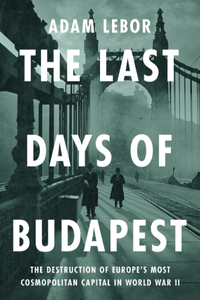
The Last Days of Budapest: The Destruction of Europe’s Most Cosmopolitan Capital in World War II, by Adam LeBor
In 1945, Budapest, once one of the cultured twin capitals of the Austro-Hungarian empire, became the site of the last great, brutal city siege of WWII--now brilliantly recreated in this new history.
Although Hungary was a German ally in 1941, two years into World War II, it was still possible for Allied prisoners of war, French and Polish refugees, spies of every kind, and the city’s large Jewish population to live freely and openly, enjoying the cafes and boulevards that made Budapest one of the great European capitals. While the other multicultural centers of Europe had fallen to the almost all-consuming conflict, Budapest remained intact, a shining reminder of what middle European high culture could be.
In September 1944, three months after D-Day, life in the city seemed idyllic. But under the guise of peace existed an undercurrent of tension and anxiety: British and American troops advanced from the west and Soviet troops from the east. Who would reach the capital first? By mid-October 1944, Budapest had collapsed into anarchy: death squads roamed the streets, the city’s remaining Jews were funneled into ghettos, Russian shells destroyed city blocks, and everyone struggled to find food and survive the winter.
Using newly uncovered diaries and archives, Adam Lebor brilliantly recreates the increasingly desperate efforts of Hungary’s leaders to avoid being drawn into the cataclysm of war, the moral and tactical ambiguity they deployed in the attempt, and the ultimate tragedy that befell Hungary and, in particular, its Jewish population. Told through the lives of a glamorous aristocrats, SS Officers, a rebellious teenage Jewish school student, Hungary's most popular singer and actress, and a housewife trying desperately to keep her family alive, the story of how Budapest is threatened from all sides as the war tightens its noose is highly dramatic and utterly compelling.
Marsha: The Joy and Defiance of Marsha P. Johnson, by Tourmaline
"Thank god the revolution has begun, honey." Rumor has it that after Marsha P. Johnson threw the first brick in the 1969 Stonewall Uprising, she picked up a shard of broken mirror to fix her makeup. Marsha, a legendary Black transgender activist, embodied both the beauty and the struggle of the early gay rights movement. Her work sparked the progress we see today, yet there has never been a definitive record of her life. Until now.
Written with sparkling prose, Tourmaline’s richly researched biography Marsha finally brings this iconic figure to life, in full color. We vividly meet Marsha as both an activist and artist: She performed with RuPaul and with the internationally renowned drag troupe The Hot Peaches. She was a muse to countless artists from Andy Warhol to the band Earth, Wind & Fire. And she continues to inspire people today.
Marsha didn’t wait to be freed; she declared herself free and told the world to catch up. Her story promises to inspire readers to live as their most liberated, unruly, vibrant, and whole selves.
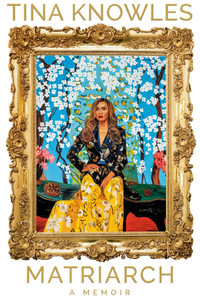
Matriarch: A Memoir, by Tina Knowles
Tina Knowles, the mother of iconic singer-songwriters Beyoncé Knowles-Carter, Solange Knowles, and bonus daughter Kelly Rowland, is known the world over as a Matriarch with a capital M: a determined, self-possessed, self-aware, and wise woman who raised and inspired some of the great artists of our time. But this story is about so much more than that.
Matriarch begins with a precocious, if unruly, little girl growing up in 1950s Galveston, the youngest of seven. She is in love with her world, with extended family on every other porch and the sounds of Motown and the lapping beach always within earshot. But as the realities of race and the limitations of girlhood set in, she begins to dream of the world beyond. Her instincts and impulsive nature drive her far beyond the shores of Texas to discover the life awaiting her on the other side of childhood.
That life's journey—through grief and tragedy, creative and romantic risks and turmoil, the nurturing of superstar offspring and of her own special gifts—is the remarkable story she shares with readers here. This is a page-turning chronicle of family love and heartbreak, of loss and perseverance, and of the kind of creativity, audacity, and will it takes for a girl from Galveston to change the world. It's one brilliant woman's intimate and revealing story, and a multigenerational family saga that carries within it the story of America—and the wisdom that women pass on to each other, mothers to daughters, across generations.
Joy Goddess: A'Lelia Walker and the Harlem Renaissance, by A'Lelia Bundles
Dubbed the “joy goddess of Harlem’s 1920s” by poet Langston Hughes, A’Lelia Walker, daughter of millionaire entrepreneur Madam C.J. Walker and the author’s great-grandmother and namesake, is a fascinating figure whose legendary parties and Dark Tower salon helped define the Harlem Renaissance.
After inheriting her mother’s hair care enterprise, A’Lelia would become America’s first high profile black heiress and a prominent patron of the arts. Joy Goddess takes readers inside her three New York homes—a mansion, a townhouse, and a pied-a-terre—where she entertained Langston Hughes, Zora Neale Hurston, Paul Robeson, Florence Mills, James Weldon Johnson, Carl Van Vechten, W.E.B. DuBois, and other cultural, social and intellectual luminaries of the Roaring Twenties.
Now, based on extensive research and Walker’s personal correspondence, her great-granddaughter creates a meticulous, nuanced portrait of a charismatic woman struggling to define herself as a wife, mother, and businesswoman outside her famous mother’s sphere. In Joy Goddess, A’Lelia’s radiant personality and impresario instincts—at the center of a vast, artistic social world where she flourished as a fashion trendsetter and international traveler—are brought to vivid and unforgettable life.